Showing posts with label Diversity. Show all posts

Wednesday, January 20, 2016

How to spot a bully

We often tell our children to not be a bully, to not allow bully's to taunt others, to stand up for those who are currently being bullied. Be a friend, be a support. Do unto others as we would want them to do to us - that is a parent's favorite saying, isn't it?


So, I'm confused.

Donald Trump is the leading Republican candidate in the presidential run. Yet, by all definitions he is a bully. So, how is he at the top of the list when we so clearly tell our children to be the opposite?

I thought about this for a while. The only conclusion I can come up with is that we really don't know what a bully is.

To help, I've gathered three common characteristics of a bully.

1. Public criticism is used to quiet a person.  I'm sure you've been the brunt of a few of these "jokes" before. I know I have. Molly Cain, a writer for Forbes magazine, pointed out an important point about bully's ... they know exactly what will hurt and they do it in public. They crush you with their words. Want to quiet John McCain, publicly criticize him for being a POW. Want to make Carly Fiorina be quiet, talk about her "ugly face" on public television.

2. Anger and spite are used impulsively to get their way.  As Adrian Furnham, of Fortune Magazine, so eloquently puts it, a bully's dysfunctional impassivity means they are quick to anger and lash out at others if things don't go their way. How many times have we heard this from Trump in order to excuse his behavior, "Well they criticized me so I punched back." It isn't so much that he criticizes publicly; it is that he uses the most hurtful words and stories to completely decimate the other person.

3. There is a lack of information replaced with confusion. Bully's tend to be all over the board. It doesn't matter if the information given is good or bad, it only matters who the bully is talking to or who they are talking in front of. If we look at Trump's behavior and rhetoric, it definitely changes. If he is speaking in front of Christians, then he is the best Christian there is; in front of a mixed crowd he admits he hasn't found the need to ever ask for forgiveness of sins.  In front of a woman-predominate crowd he totes on how much he respects women; he has said some of his most sexist remarks in front of mixed-gender crowds.

As adults, do we not have the responsibility to mirror appropriate behavior to a younger generation? If so, then why are a majority of Republican voters (some of whom would normally vote the democratic ticket) supporting a candidate who shows all the signs of a bully?

If you are a Trump supporter, I'd like to hear how you reconcile voting for someone who bullies others. More importantly, how do you explain bully behavior to your child or grandchild. Maybe I'm missing something, educate me.


Tuesday, December 8, 2015

What would you include in the job description for Santa Claus?

What would you include in the job description for Santa Claus? How about round belly, white beard, jolly personality, willing to sit for hours, be able to withstand heat, and patience. That's a pretty good list.

What about proficient in American Sign Language, ability to get in and out of chair often in order to reach customer, being willing to interact with children who have differing abilities, and multilingual? While we often forget these important characteristics, they are just as important as the first list.

This is why the acceptance of diversity is so important in business. Gone are the days when we had the cookie cutter life, when those who are different are relegated to live-in facilities or to the walls of their home. Gone are the days when all of our customers do not expect to have the same experience.

I work in the Quality Department of a company whose greatest workforce population speaks Spanish as their first language. Most of them know how to speak and write English; however, they are most comfortable in Spanish. All training at our location is performed in English only. How effective do you think that has been? When a new Quality Engineer tasked with developing ongoing training efforts for all of the employees said that all training should be in English and Spanish, upper management bristled. Diversity is a part of all business functions - even Quality.

Have you wondered what the experience would be for a child with differing abilities meets a Santa who can accommodate her? Watch the video and experience the wonderment.


Thursday, December 3, 2015

How do you define diversity?

I love watching TedTalks. In 15 to 20 minutes I get to hear someone's experience, opinion, or knowledge on various topics. Often it makes me, as a former professor used to say, think harder.

Recently, I did a search on YouTube for “TedTalks and Diversity”. The search results surprised me. Of the top ten listings, eight of them were for racial diversity. I'm not sure why I was surprised, when I speak with others about diversity that is the first definition their mind goes to. Typically, in my sphere of influence it is usually the differences between Black and White. Maybe I need to change my sphere or maybe this is how narrowly people define diversity. Even Miriam-Webster does it. Here is the first definition listing for Diversity:

“the condition of having or being composed of differing elements: variety; especially: the inclusion of different types of people (as people of different races or cultures) in a group or organization."

In reality, diversity is a very broad topic covering differences in age, ability, culture, sexual, sexuality, gender , religious and the list can go on and on. For those of you who are stuck in the middle of my list wondering why I repeated sex, sexuality, and gender, each of those categories are separate and distinct; but, that is a topic for another day.

For just a moment, lets see how other news sources define diversity. A search on USAToday's  website does better than YouTube; three of the top ten diversity articles are race related. The Washington Post had the same results – three out of the top ten articles centered on race. Both of these established news agencies had a result of 30% for racial diversity. I expected to see maybe one hit on racial diversity and nine hits on all the other types of diversity. Only  CNN's website gave me that type of diverse listing; zero out of the top ten diversity articles centered on race.

Granted, YouTube and these three news giants are not the end all be all of literacy nor are they an authority on diversity in the United States. Yet, they do play a large role in how we see the nation and the world around us. Having an article search on the word diversity turn up so many articles of racial diversity and little to none centering on other types of diversity is a little disconcerting.

When we speak of diversity and how diversity can make an organization, a family, a nation stronger, we need to really look at all of diversity. There have been many examples of how to look at diversity; some say it is a lettuce salad with multiple types of salad and accompaniments all put together in one dish, others see it as a melting pot. I correlate diversity to a piece of Oriented Strand Board or more commonly known as OSB Board. Have you ever seen OSB? It is made up of little pieces of wood glued together in different angles; it literally looks like someone laid out a layer of wood chips and poured glue over them so that they stayed in place. Multiple layers of this glued-together-wood-chip substance are put together to make one board. It is almost indestructible and damage proof.  

In my mind, that is how diversity is. When people open themselves up enough to work together, get to know each other, and trust each other the group can become almost indestructible. The glue that ties us together is the respect we have for each other and the common narrative we have. That narrative may be the simple fact that we are all human and need love, acceptance, and nourishment. Once a group develops trust the ongoing dialogue can create even more common narratives such as social and belief networks and systems. Through the common narratives society as a whole becomes more supportive and in turn families become stronger, children have higher educational and social achievements, and communities become more inclusive.

I have a challenge for each of you. Look at your sphere of influence and ask yourself how diverse it is. Do you need to broaden your wings a little bit? Do you need to include others who are different from you? For those of you who already have a diverse sphere of influence, do you know what your common narrative is? Have you asked those in your network what they believe that narrative is and do you agree?


It will be interesting to hear what your answers are.  

Wednesday, December 2, 2015

Do you walk away from diversity?

So many of us have been hurt by religion. I know I was, I walked away from my faith and then after much searching and learning about the facts of my faith - not always what I was taught - I came back.

But, what do we do when we are hurt by our faith? Do we just walk away and make believe nothing has happened? Do we allow the faith to continue to go on as normal? Many of us choose to do that very thing. Many choose to walk away and never help to create or make change from within.

In the TedTalk that I listened to this morning, Chelsea Shields answers that question from her vantage point. She didn't walk away from her faith when things were unequal, she didn't stop showing up for service, she didn't ignore the problem. She stood there and fought the good fight to change a system that was not defining the original claims of her faith.

That, in its essence, is what diversity is about. It is not about ignoring the problems that we have, not about walking away mad, and its definitely not about giving up. Rather, it is about standing in the gap and realizing that a change must be made and slowly making that change. Diversity is about looking at our individual issues, gaps, mishaps, and figuring out how to reconcile them with the world.

Take a few minutes and listen to Chelsea and let me know what you thought of it.


Thursday, November 26, 2015

Thankful that I don't belong

I grew up in a homogeneous town in Wisconsin. Most of the people surrounding me looked like me, talked like me, were able bodied like me, ate the foods I did, and believed in the same God I did. After high school graduation, I moved to a bigger city and although my friend and acquaintance circle was starting to gather some that didn't look as much like me or believe in the same God as me or eat the same food as me, for the most part I was still living a pretty homogeneous life. I met and fell in love with a man that didn't look like me.

Through the years of living in a diverse home we've had some ups and downs; we've even had some unpleasant conversations. It made me think about those deep rooted opinions and beliefs that I carried from childhood into adulthood. Communication hasn't always easy been as easy as it may have been in a homogeneous house. Yet, despite the differences in our home and the differences of how the world treated me and how it treated the rest of my family (husband and now four children) I still had a sense of where I belonged.

I started diversity discussions to help both myself and the community around me understand our changing world. I've had conversations with friends and family about diversity - some of which did not turn out so hot. I began writing diversity articles for the local alternative newspaper. Although I was pointing out all the differences around me, I still had a sense of where I belonged.

After raising our children, my husband and I made the decision to move to California to spend more time with his daughter and grand-children. We settled in Santa Maria, CA. Santa Maria is a city of just under 150,000 people on the Central Coast of California. The demographics pulled from the U.S. Census show a city much different than any I've lived in before. The first column shows the percentage of the population in Santa Maria, CA that fit into the assigned racial group and the second column shows that same racial group as represented throughout California as a whole.


Black or African American alone, percent definition and source infoBlack or African American alone, percent, 2010 (a)1.7%6.2%
American Indian and Alaska Native alone, percent definition and source infoAmerican Indian and Alaska Native alone, percent, 2010 (a)1.8%1.0%
Asian alone, percent definition and source infoAsian alone, percent, 2010 (a)5.1%13.0%
Native Hawaiian and Other Pacific Islander alone, percent definition and source infoNative Hawaiian and Other Pacific Islander alone, percent, 2010 (a)0.2%0.4%
Two or More Races, percent definition and source infoTwo or More Races, percent, 20105.1%4.9%
Hispanic or Latino, percent definition and source infoHispanic or Latino, percent, 2010 (b)70.4%37.6%
White alone, not Hispanic or Latino, percent definition and source infoWhite alone, not Hispanic or Latino, percent, 201021.7%40.1%

I live in a city where 70.4% of the people are not from my culture; where it is obvious that most are not comfortable speaking my language. Where the food I am most used to eating isn't a commonplace --- no Culver's, Chicago Polish Sausage, bratwurst, no Friday night fish frys, or no cheese straight from the factory. 

For the first time in my life, I realize that I don't really belong; I realize that I need to actually work at belonging. I may need to learn another language and I may need to learn to eat some other foods in order to belong. The point is that I won't belong unless I do something different. Although I have been involved in diversity activities of all sorts for quite some time, I realized it didn't adequately prepare me for living in a city where a vast majority of people are different from me.

I'm grateful that I've had the ability to talk about diversity. Now, I'm very grateful that I have the opportunity to see from the inside out what it is like to live in an area where I am the minority. I'm grateful that I have met some people who have helped me navigate this different terrain; are willing to explain what a food is or where to find the best bargains or how to basically communicate to others. Above all, I'm grateful that for this season of my life I am living as the minority. It is teaching me humility, it is giving me a different perspective of life, it is allowing me to see how my actions and those from my community may negatively affect others without us even knowing.

Slowly I am learning how to belong.


Monday, November 16, 2015

Diversity is our responsibility

Screenshot from Facebook, November 15.

You may have seen this picture in your Facebook feed.

It is in response to the world's outpouring of support for France after the terrorist attack last Friday. It is meant to be an honest question - Why was there such a huge social media response of the French attacks and very little, if anything, mentioned after the Kenyan attack?

We know from looking at other news sources that the event was covered through many news outlets online and on television.  We also know the U.S. government had been watching the increase of terrorism throughout Kenya and for that reason, in May, the U.S. pledged $100 million in counter terrorism assistance to Kenya.  Of this $100 million,  $95 million will be used to help fund the Kenyan army.

Yet, most people had no idea about the Kenyan attacks nor the increased financial aid given to Kenya. Why?

Some may say that it is because there is no financial gain to help Kenya. Although Kenya relies on American trade to support much of its growing economy, America does not rely on Kenya. Others may say that the corrupt government of Kenya brings attacks into its country and therefore sympathy is lacking. Still others will say that it is racism; it is easier for a majority-White country to empathize with another majority-White country than it is to empathize with a majority-Black country. I think there is truth in all of those opinions.

Yet, they do not adequately sum up the great disparity in the social media support of France when compared to the support of Kenya. The U.S. government does not, in my opinion, regulate social media; in fact, quite the opposite. One can find posts from the government on all social network sites, but they are not the posts that become viral.

My opinion in this whole matter is: it is our own fault. We decide what we are going to share, post, reply to, and ignore on social media. We decide what we are going to pay attention to in the news headlines. Therefore, it is up to us to become more dynamic and involved in world events. It is our responsibility to make a story go viral. But, before we can do that we must be connected. We need to connect to places people across the pond, to places and people that are completely different from us, to places and people that need our social network support just as much as anyone.

Do you want to support Kenya as much as France? Do you believe that Beirut should have had more support on social media? Did you post anything about either terrorist occurrence? Did you ask your friends and relatives to change their profile picture to the national flags?

The answer is probably, "No".  That is the reason that Kenya did not get more attention. We did not take the personal responsibility to share, post, prod others to follow, and otherwise publicize the bombings in Kenya.


Sources:
http://www.securityassistance.org/latin-america-and-caribbean/fact_sheet/us-counterterrorism-aid-kenya


Tuesday, March 17, 2015

Gender Pay Gap

It is infuriating - you know you can do the job, you know you have the skills, and you know that you have the support from co-workers. Yet a man has been picked for the position. How many times has this happened to you? Me - more than I want to count.

In my case, the man picked is usually less competent, has less education, and doesn't have the people skills (without more training). What he does have is commonality among the rank and file hiring him.

From the stats in this article it will be a very long time before this changes. When are we, women, going to demand more? When are we, women, going to unite and make the change happen?

At this rate, American women won’t see equal pay until 2058 http://wapo.st/18TwUuc

Monday, March 16, 2015

With all the anti-muslim sentiment in the U.S. I again ask, if the view of ISIS is the view of Muslims, as a whole, why are these women fighting ISIS?

Stereotypes can be a dangerous way to categorize people. It creates a wall that prevents understanding of commonalities, not too mention the total lack of personal growth.

The Kurdish women fighting ISIS http://www.cnn.com//2015/03/12/world/cnnphotos-female-peshmerga-fighters/index.html

Monday, February 16, 2015

The Oshkosh Independent!

Oshkosh has a new online newspaper that I believe is relevant, dynamic, and so important for Oshkosh's autonomy. If you were a fan of the Oshkosh Scene (which is now the Fox Valley Scene), then you'll be a fan of the Oshkosh Independent.

Many of the same writers we found in the Oshkosh Scene are present in OI.  Just like the Oshkosh Scene, you can find "Diversity Matters" in the OI.

This month, I strayed away from my typical article concept of writing about Oshkosh being careful to not entertain too much of my own opinion. That would not describe my first article for this publication.

Check out ..... "Ferguson: Your Questions, My Answers" and let me know what you think.


Friday, January 30, 2015

QVC video offensive?

A recent QVC session included two hosts showing off a handbag, and while talking about the handbag they made comments about not liking your hair. The camera panned to an African-American model, with beautiful natural hair. As a mother of two girls, both with natural hair, this video is offensive to say the least.

The two hosts would like to have us believe that their conversation was simply about the great purse and not about the young woman's hair. Do you believe that?


Thursday, January 29, 2015

Facts Instead of Myths

Too often our ideas of other people are made up of stereotypes. Stereotypes are simply myths that seem to have at least a minuscule bit of truth or they are generalities that we want to see for a whole society, when it may be true only for a few.

Here is a welcome reminder that those myths are often misplaced. Do any of them surprise you?

In this photo taken Nov. 23, 2009, Lisa Zilligen, 28, serves lunch to her three children, Miles, 20 months, Olivia 6, left, and Danielle, 8, in her home in Chicago. Zilligen, a single mother and full-time student at Loyola University has been getting food stamps for the past several months; sometimes the allotment runs out before the end of the month and the family ends up visiting a food pantry. (AP Photo/M. Spencer Green)

This post originally appeared in this month’s issue of Mother Jones magazine alongside an article entitled “What If Everything You Knew About Poverty Was Wrong?”
1. Single moms are the problem. Only 9 percent of low-income, urban moms have been single throughout their child’s first five years. Thirty-five percent were married to, or in a relationship with, the child’s father for that entire time.*
2. Absent dads are the problem. Sixty percent of low-income dads see at least one of their children daily. Another 16 percent see their children weekly.*
3. Black dads are the problem. Among men who don’t live with their children, black fathers are more likely than white or Hispanic dads to have a daily presence in their kids’ lives.
4. Poor people are lazy. In 2004, there was at least one adult with a job in 60 percent of families on food stamps that had both kids and a nondisabled, working-age adult.
5. If you’re not officially poor, you’re doing okay. The federal poverty line for a family of two parents and two children in 2012 was $23,283. Basic needs cost at least twice that in 615 of America’s cities and regions.
6. Go to college, get out of poverty. In 2012, about 1.1 million people who made less than $25,000 a year, worked full time and were heads of household had a bachelor’s degree.**
7. We’re winning the war on poverty. The number of households with children living on less than $2 a day per person has grown 160 percent since 1996, to 1.65 million families in 2011.
8. The days of old ladies eating cat food are over. The share of elderly single women living in extreme poverty jumped 31 percent from 2011 to 2012.
9. The homeless are drunk street people. One in 45 kids in the United States experiences homelessness each year. In New York City alone, 22,000 children are homeless.
10. Handouts are bankrupting us. In 2012, total welfare funding was 0.47 percent of the federal budget.

Do "Christian" and "Diversity" go together?

The last paragraph of this article sums up what is often missing in our Churches. 

The only true solution is a change of heart, one person at a time. Jesus knew it. That’s why he talked to the Samaritan woman one on one. He revealed he knew her secrets, but he didn’t judge her for being a Samaritan, a woman or a prostitute. And, because he treated her with kindness and respect, she followed Jesus, told others about him, and they started to follow Jesus too.

The question begs to be asked ---- how do we do church differently? 

Thoughts?

The entire article can be found here: Can Christians Handle Diversity?


Wednesday, January 28, 2015

A republican talking about diversity?

Jeb Bush: Republicans Too ‘Anti’
Photo from Bloomberg.com

Very seldom will you see me write a post about supporting one political candidate over another ..... I don't campaign for anyone. Rather, what I will do is point out what some politicians say - positive and negative.

So, here is my take on a recent article about Jeb Bush. First, I had no idea that he was able to speak multiple languages. Just as I didn't know his family is multi-ethnic.

Both sources said that at the fundraiser Bush focused on how he's not only multilingual but also multi-cultural. He mentioned his wife, Columba, who's from Mexico, and how one of his daughters-in-law is of Iraqi descent, referring to Sandra Algudady, a native Canadian of Iraqi descent who married his son, Jeb Bush, Jr.

It is also refreshing to see a Republican candidate pushing for diversity in American culture.

On immigration, Bush argued that diversity is a strength and that immigrants have had a vital role in building the country through businesses and hard work.
The only question .......

Are we ready for another Bush? I'll let you decide that for yourself.

The entire article is here:  Jeb Bush talks diversity, foreign policy at fundraiser


Tuesday, January 27, 2015

Join Fit Oshkosh in a Movie Night and Chatback

This Saturday is a great chance to immerse yourself in a difficult conversation that may change your outlook on life.

Thursday, January 15, 2015

During a visit to Washington, D.C., photographer Julia

During a visit to Washington, D.C., photographer Julia Barden decided to visit the city's monuments. While walking down the steps from the Lincoln Memorial, she spotted these two women taking in the memorials as well.

From USAToday  http://www.usatoday.com/picture-gallery/opinion/2014/11/07/around-the-world-displays-of-diversity/18443695/


Wednesday, January 14, 2015

Diversity?

I came upon this cartoon this week in another blog. This is exactly why diversity initiatives in many businesses and communities do not work.


Thursday, December 18, 2014

Brave 9-year old girl

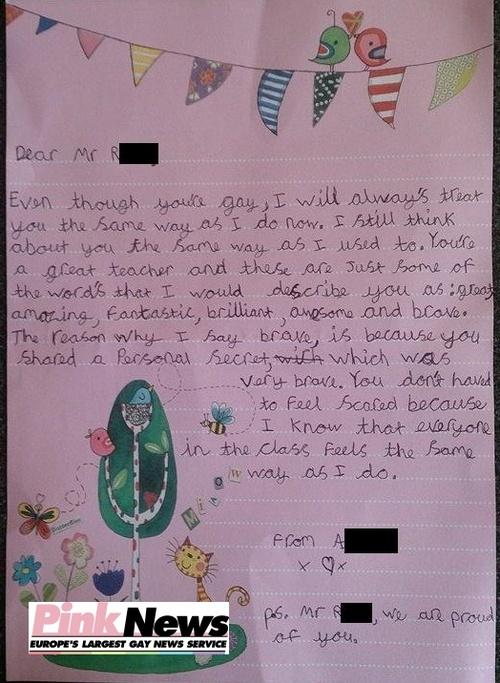
Recently, a school in the United Kingdom was conducting a class on bullying. After a week of lessons, the teacher was surprised to find out that, "almost every student in his class thought that people who were gay or lesbian were 'bad or wrong in some way'; additionally, most said they'd heard the word 'gay' used as an insult."

The teacher decided to share his secret with the class - he is gay. The response of one of his students was priceless and invaluable.

9-Year-Old Girl Writes Sweetest Letter to Gay Teacher

This young lady has learned a valuable lesson that many adults have missed. A person's sexuality does not make him or her a "bad person". Similarly, using the word "gay" as an insult to anyone is in essence passing judgement on anyone who is gay. 

She is definitely a brave young lady.